Shopping Cart
Total:

0.00

Items:

0

Your cart is empty
Keep Shopping

About ADC

Motto: ADC! Absolute Development of Africa Now, Against All Odds!!

“Development is first of all a mindset”

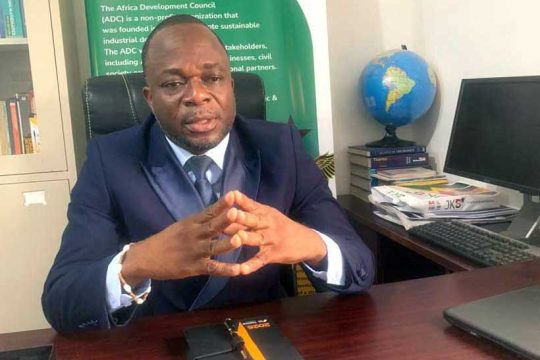
The Africa Development Council (ADC), a conglomerate of Industrialization Advocacy Organizations, is a non-profit organization whose initial activities started in Ghana, 2008, when an NGO, Science & Technology Advocacy Renaissance for Africa (STARFA), now one of the subsidiaries of the ADC, got incorporated in Ghana to promote application of Science & Technology via intensive advocacy. 

The Organization, ADC got incorporated and certified in Ghana in 2023, when it assumed an international dimension to promote sustainable industrial development in Africa. 

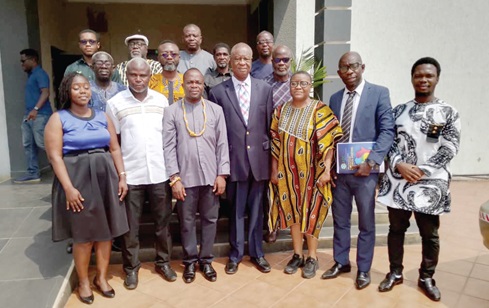
The ADC works with a variety of stakeholders, including African governments, businesses, civil society organizations, and international partners. ADC, is a trans-Africa Kingdom, aimed at restoring Africa to her former Glory of self-sufficient continent.

AFRICAN UNITY: THE UNFINISHED DREAM OF LIBERATION A Paper Presented at African Leaders Forum, 2026 Theme: “Reclaiming the African Future Through Unity, Sovereignty, and Collective Development” Introduction Distinguished Heads of State, eminent scholars, diplomats, captains of industry, youth leaders, and defenders of the African dream, I bring you revolutionary greetings from a continent rich in resources yet burdened by fragmentation; a continent blessed with genius yet weakened by disunity; a continent politically independent in appearance but economically vulnerable in practice. Africa stands today at a historic crossroads. The urgent question before us is not whether Africa possesses greatness. History has already answered that. The real question is whether Africa can unite sufficiently to transform her immense potential into collective prosperity, security, dignity, and global influence. The struggle for African unity did not begin today. It was envisioned by giants such as Kwame Nkrumah, Patrice Lumumba, Sékou Touré, Gamal Abdel Nasser, Modibo Keita, and Ahmed Ben Bella. These leaders understood a fundamental truth: divided Africa would remain vulnerable to external domination, while united Africa would become an unstoppable force in world affairs. Yet between 1960 and 1966, many of the boldest efforts toward continental unity were systematically undermined through foreign interference, economic sabotage, propaganda, political destabilization, and military coups. Whether one agrees fully with every historical interpretation or not, the broader lesson remains undeniable: Africa’s fragmentation has consistently benefited external powers more than Africans themselves. This paper therefore seeks to examine: 1. Why African unity remains indispensable in 2026; 2. How historical disruptions weakened continental integration; 3. The modern forms of neo-colonial dependency; 4. The urgent need for a renewed Pan-African agenda; 5. Practical pathways toward African unity and renaissance. 1. THE HISTORICAL DREAM OF AFRICAN UNITY The dream of African unity was born out of necessity rather than romantic idealism. Colonialism had partitioned Africa artificially, dividing ethnic groups, weakening indigenous governance systems, and restructuring economies to serve foreign interests. At independence, visionary African leaders realized that political flags alone would not guarantee true freedom. Kwame Nkrumah famously warned: > “Political independence is meaningless unless it is linked with the total liberation of Africa.” Nkrumah proposed: A United States of Africa; A continental army; A common currency; Unified economic planning; Collective security structures; African control over African resources. The Ghana-Guinea-Mali Union represented one of the earliest practical attempts at regional integration. These leaders understood that individually, African states were too economically weak and politically vulnerable to withstand global power competition. Unfortunately, the Cold War transformed Africa into a geopolitical battlefield. External powers feared that a united Africa controlling its minerals, oil, gold, cocoa, uranium, diamonds, and strategic ports would fundamentally alter global economic structures. 2. FOREIGN INTERFERENCE AND THE FRAGMENTATION OF AFRICA Between 1960 and 1966, several transformative African leaders faced destabilization, assassination, exile, or coups. The Congo Crisis and the Death of Lumumba Patrice Lumumba envisioned a sovereign Congo where mineral wealth would benefit Congolese citizens rather than foreign corporations. His nationalist posture alarmed Belgian interests and Western intelligence agencies during the height of the Cold War. His assassination in 1961 became symbolic of the vulnerability of independent African leadership. It sent a chilling message across the continent: radical sovereignty would face severe resistance. The Congo crisis also demonstrated how mineral-rich African nations could become targets of geopolitical manipulation. The Undermining of Nkrumah’s Pan-African Vision Kwame Nkrumah invested heavily in continental liberation movements and advocated immediate African political union. However, his government increasingly faced internal opposition, economic difficulties, and external hostility. The 1966 coup that removed Nkrumah from power while he was abroad marked a devastating setback for Pan-African integration efforts. Declassified historical records over the decades have shown that foreign intelligence agencies closely monitored and sometimes supported anti-Nkrumah elements during this period. The collapse of the Ghana-Guinea-Mali Union weakened momentum toward continental federalism. France and “Françafrique” France maintained extensive post-colonial influence across Francophone Africa through: Military agreements; Monetary systems; Political networks; Economic dependency structures. Critics argue that the CFA Franc system preserved disproportionate French influence over the monetary policies of several African nations. Whether defended as stability-enhancing or criticized as neo-colonial, the debate itself reflects the unresolved tension between sovereignty and dependency in post-colonial Africa. 3. WHY AFRICAN UNITY IS STILL NECESSARY IN 2026 The arguments for African unity today are even stronger than they were in the 1960s. A. Economic Power Through Integration Africa possesses: 30% of the world’s mineral resources; Vast arable land; A youthful population; Enormous renewable energy potential; Strategic maritime routes. Yet Africa contributes only a small percentage of global manufacturing and trade. Fragmentation has weakened bargaining power and increased dependence on external markets. A united Africa could: Build continental industries; Negotiate better trade agreements; Establish regional value chains; Strengthen intra-African trade; Reduce dependence on imported goods. The African Continental Free Trade Area represents an important step toward economic integration, but much more remains to be done. B. Collective Security Terrorism, piracy, cybercrime, illegal mining, arms trafficking, and unconstitutional changes of government threaten several African regions. No single African country can adequately address these challenges alone. Africa requires: A coordinated continental defense architecture; Intelligence-sharing mechanisms; Joint border security operations; African-led peacekeeping structures. The absence of a strong continental security system leaves room for excessive external military dependence. C. Monetary Sovereignty Many African economies remain vulnerable to: Currency instability; Debt dependency; Commodity price fluctuations; External financial conditionalities. A stronger African monetary cooperation framework could reduce vulnerability and promote long-term economic stability. D. Youth and Demographic Opportunity By 2050, Africa will possess the world’s largest youth population. This can become either: A demographic dividend; or A demographic crisis. Unity can facilitate: Educational harmonization; Youth mobility; Technology transfer; Pan-African innovation ecosystems; Job creation through regional industrialization. E. Cultural and Psychological Liberation Colonialism did not merely occupy African land; it also shaped African consciousness. Many Africans still know more about European history than African civilizations. Unity requires: Reclaiming African intellectual traditions; Strengthening African languages; Teaching Pan-African history; Building continental cultural confidence. Africa cannot rise while mentally dependent on external validation. 4. THE MODERN FACE OF NEO-COLONIALISM Neo-colonialism today rarely appears in the form of direct colonial occupation. Instead, it often manifests through: Debt dependency; Resource extraction agreements; Currency influence; Military partnerships; Media narratives; Technological dependence. External powers continue competing aggressively for African minerals critical to modern industries, including lithium, cobalt, uranium, and rare earth elements. Without unity, Africa risks remaining merely a supplier of raw materials while importing expensive finished products. 5. LESSONS FROM THE FAILURES OF 1960–1966 The tragedy of the early Pan-African era offers several lessons: Lesson One: Disunity Is Costly Fragmentation weakens bargaining power and exposes nations to manipulation. Lesson Two: Economic Independence Matters Political independence without economic control remains incomplete. Lesson Three: African Problems Need African Solutions Dependence on external actors for security, development financing, and governance models creates structural vulnerability. Lesson Four: Leadership Must Be Visionary and Ethical Corruption, tribalism, ethnic polarization, and personal ambition continue undermining continental progress. Lesson Five: Unity Requires Sacrifice True integration demands compromise, institutional discipline, and long-term commitment. 6. PRACTICAL PATHWAYS TOWARD AFRICAN UNITY African unity must move beyond rhetoric into practical implementation. A. Strengthening Regional Blocs Organizations such as: Economic Community of West African States, Southern African Development Community, East African Community must become stronger engines of integration. B. Infrastructure Connectivity Africa needs: Continental railway systems; Modern highways; Digital infrastructure; Energy interconnectivity; Regional airlines and ports. Trade cannot flourish where roads and logistics fail. C. Educational Reform African education systems must prioritize: African history; Entrepreneurship; Science and technology; Civic responsibility; Pan-African consciousness. D. Visa-Free African Movement Africans should move across Africa more easily than foreigners do. A true African passport would: Promote trade; Encourage tourism; Foster cultural exchange; Deepen continental identity. E. Resource Nationalism and Industrialization Africa must move from: exporting raw cocoa to producing chocolate; exporting crude oil to refining petroleum; exporting minerals to manufacturing batteries and electronics. Industrialization remains central to sovereignty. 7. THE ROLE OF AFRICAN LEADERS IN 2026 African leadership today must reject: ethnic division; corruption; dependency politics; short-term governance. The leaders of this generation must become architects rather than caretakers. The dream of unity requires leaders willing to: think continentally; cooperate strategically; prioritize future generations over political survival. Conclusion Distinguished participants, the story of Africa from 1960 to 1966 is not merely a story of lost opportunities. It is also a warning and a call to action. The men who dreamed of African unity may have been removed from power, isolated, imprisoned, or assassinated, but the core truth they proclaimed remains alive: Africa’s destiny can only be secured through unity. The world respects strength, organization, innovation, and strategic cooperation. Africa possesses all the ingredients for greatness, but greatness cannot emerge from perpetual fragmentation. The question before us is no longer whether African unity is necessary. History, economics, security realities, and demographic trends have already answered that question. The real question is whether Africa possesses the courage, discipline, and leadership to complete the unfinished mission of liberation. As Kwame Nkrumah declared: > “The forces that unite us are intrinsic and greater than the superimposed influences that keep us apart.” May Africa rise beyond artificial borders. May Africa rise beyond dependency. May Africa rise beyond fear. May Africa finally become master of her resources, architect of her destiny, and defender of her civilization. The dream was delayed. It must not die again. Thank you. Michael Ackumey ADC Consultant

Featured Articles

Must-read pieces from our top writers.

View All

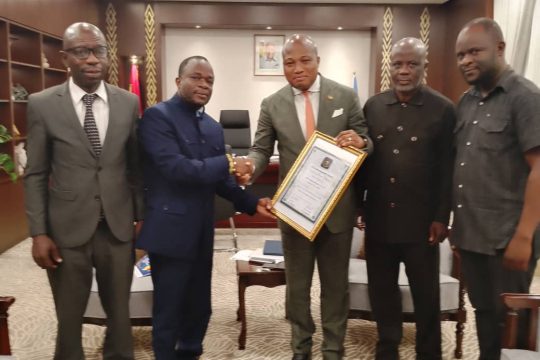
ADC Awards Foreign Affairs Minister – Hon. Okudzeto Ablakwa

4.20kviews
806likes

Foreign Affairs Minister, Hon. Okudzeto Ablakwa, has been Awarded Certificate of Honour, as Most Dynamic Minister, by ADC, in the Category of Global Diplomacy 1) On Tuesday, 28th of July,...

ADC urges probe into foreign affairs spending

3.79kviews
2.65klikes

Dive deep into the changing cultural dynamics in cinema. This video uncovers how recent movies are echoing the societal changes we’re witnessing globally, from representation to storytelling.

Why the U.S. Skipped South Africa’s G20 Summit – and...

5.11kviews
2.34klikes

Dive into the world of Renaissance art and discover how it shaped modern-day culture through its unique techniques and groundbreaking innovations.

1 1

Weekly Roundup

A summary of this week’s top content.

View All
Category
0
  • All
  • Agriculture
  • Business
  • Culture
  • Education
  • Health
  • Innovation
  • News
  • Peace
  • Politics
  • Projects
  • Publications
  • Science
  • Security
  • Survey
  • Technology
1 2 5

In-Depth Reviews

Professional insights on products worth trying.

View All

Explore Categories

Top picks from each content category.

View All
Uncategorized

6 articles

Technology

7 articles

Survey

3 articles

Security

3 articles

Science

1 articles

Publications

15 articles

Projects

2 articles

1 1