The Ghanaian government plans to establish four new universities – an announcement that has had a mixed response from within the sector.
Whereas the plan has been welcomed because it would expand access to the growing number of school leavers seeking tertiary education, the lack of funding for existing institutions has raised questions about the government’s ability to finance new universities, experts told University World News.
Ghana currently has 16 public universities, 10 technical universities, 48 colleges of education as well as seven agricultural and veterinary colleges; and 77 nursing and allied health colleges. There are also 120 private universities, culminating in 278 tertiary institutions of higher learning, according to Eliasu Mumuni, the immediate past general secretary of the University Teachers Association of Ghana (UTAG), and currently the president of the University for Development Studies (UDS) branch of UTAG.
Said Mumuni: “Ghana still needs universities, on account of access.”
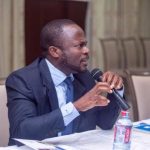
But Bright Sogbey, the president of the Africa Development Council, disagrees, saying that Ghana has enough higher educational institutions and has other priorities.
“What Ghana lacks now is industrialisation. Having gone through education, you must be employed. Unfortunately, the industries are not there. We have heavy industries like the Volta Aluminium Company and Aluworks that are collapsing – or have collapsed. That is where our budget should go, not to new schools,” Sogbey told University World News.
What the government is planning
Cassiel Ato Forson, the minister of finance, said in the 2026 budget statement in parliament on 13 November that two public universities will be established in Kintampo in the Bono East Region, and Dambai in the Oti Region. Two technical universities are also to be established – one in Jasikan in the Oti Region, and the second in Techiman in the Bono East region.
“We will expand opportunities for tertiary education in engineering and agriculture from the 2026 academic year,” he said.
He added that, in addition to the four universities the government is establishing, a fifth institution, in partnership with the Catholic Church, is also in the pipeline. The Catholic University of Science and Technology will be in Damongo.
In 2024, the previous government in Ghana also announced the establishment of more universities, but they never materialised.
The former president, Nana Addo Dankwa Akufo-Addo, announced that a university of engineering and agricultural sciences was to be set up in Bunso, Eastern Region, with satellite campuses at Donkorkrom, also in the Eastern Region, at Kenyase in the Ahafo Region and Acherensua, in the Ahafo Region.
Earlier in 2024, he also announced plans to establish four more universities. However, none of these universities materialised under the former government.
In the 2026 budget statement, Forson said the government’s no academic or tuition fee policy has benefited 120,222 first-year tertiary students, with 23,704 applications pending validation. The number of beneficiaries is projected to rise to over 220,000 in the 2026-27 academic year.
It is against this backdrop, according to the minister, that access had to be expanded.
A university for every region
Kofi Asare, the executive director of the education policy research and advocacy organisation, Africa Education Watch, told University World News there is a need for new universities because access to tertiary education is still constricted.
“We are producing over 500,000 secondary school graduates every year, heading to 503,000, and only 200,000 are able to enter tertiary institutions, both public and private, which can currently take only 200,000, making up only 45%,” Asare said.
He said that, geographically, there was the need to have one university in every region of Ghana so that students do not have to travel far to learn because of cost implications.
Besides that, locating a university in every region has always been a policy in the country. Since Ghana has 16 regions, it is important to bring access closer to the people, according to him.
Asare admitted that there is also a school of thought that the economy is not big enough to handle the 200,000 tertiary graduates produced annually and, therefore, there was no need to expand access – and that the higher education system cannot accommodate all the applicants.
However, he debunked this idea, saying the public and private sector, together, can handle the numbers.
He said almost all the new tertiary institutions built in the past two years and those that have been planned are in the area of science, engineering and mathematics, which makes them different from those focusing on humanities.
Access critical
Said Mumuni of UTAG: “With a population of about 33 million to 34 million, access and availability remains key. For example, when the University for Development Studies was to be established in the north in 1992, the general feeling was that the north was not ready for a university, and that we had the likes of University of Cape Coast, University of Ghana, and the Kwame Nkrumah University of Science and Technology,” Mumuni said.
However, he said, over time, the national impact of the UDS has been seen, not just based on where it is located, but in terms of its benefit nationally.
He said looking at the geographical spacing of the current institutions, one can conclude that it has brought about the deepening of literacy and education with an impact on the general human development index.
Despite this, Mumuni said UTAG has a challenge as a union, because of the lack of funding to the existing public universities.
He said: “Our laboratories and workshops have almost nothing to write home about,” adding that, “in all the traditional 16 universities and the 10 technical universities, you can’t just get a particular public university that is well-equipped to compete with global higher education requirements.
“So, while we will not have a problem with government introducing new additional universities – because we think it will solve the issue of access problems and the human capital [development] of the people – we think that it is always important to be retooling these existing ones,” he noted.